Advice
The new government-backed Warm Homes loans can spread the cost of solar, batteries and heat pumps. Here is how they work, step by step, with the pros…
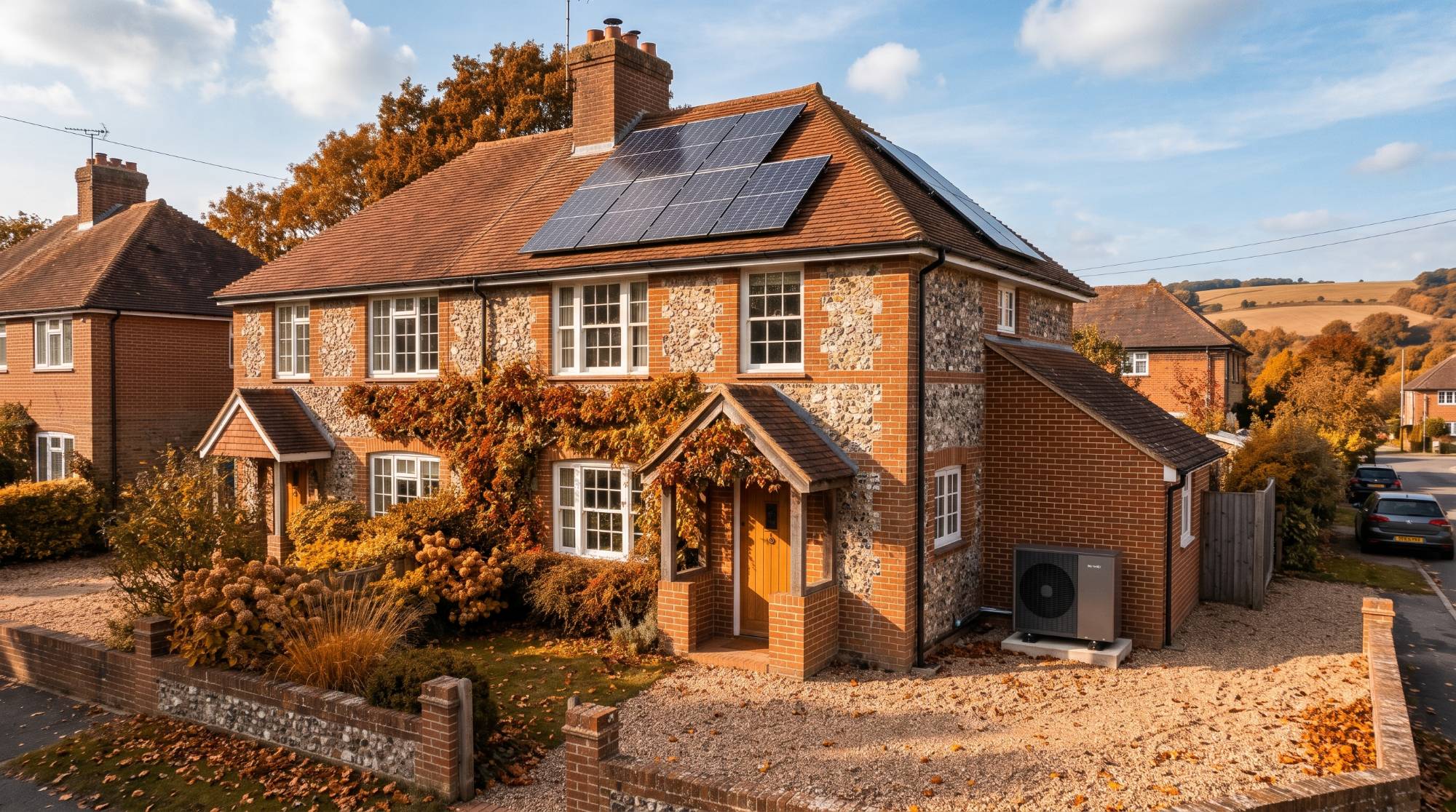
The Warm Homes Loan Scheme opened on 27 October 2026. It offers government-backed loans for solar panels, batteries and heat pumps, at lower interest rates than a normal loan. For many households it could make an upgrade possible without paying everything upfront. It is still borrowing, though, so it pays to go in with your eyes open.
Below, we walk through the process one step at a time, with the benefits and the risks at each stage. Everything here comes from the government's own guide and factsheet.
You can apply if you own your home, with or without a mortgage, and it is a residential property anywhere in the UK. Renters cannot apply.
Benefit: there is no income limit, so it is open to any homeowner who passes the lender's checks.
Risk: if money is already tight, borrowing may not be the right answer. Lower-income households may be able to get free improvements through grants instead. In East Sussex, call the free Warm Home Check service on 0800 464 7307 (or text WARMHOME to 88440) before you borrow.
Before choosing any technology, look at insulation and draught-proofing. A warmer home needs a smaller heat pump, which costs less to buy and to run.
Benefit: you borrow less, and every upgrade works better.
Risk: borrowing for a heat pump in a draughty, poorly insulated home can mean a bigger system and higher running costs than you expected.
The loan can be used alongside the Boiler Upgrade Scheme grant: £7,500 towards an air source or ground source heat pump, or £9,000 if your home is heated by oil or LPG with no mains gas (the extra £1,500 is available until March 2027). See our grants page.
Benefit: the grant comes off the price first, so you only borrow the rest.
Risk: the government's guidance also says you cannot use a loan and other government funding to pay for "the same improvement". Ask your installer and lender to show clearly how the grant and the loan are set out on your quote.
The work must be done by a Microgeneration Certification Scheme certified installer (heat network connections are the only exception). You cannot install it yourself. Get at least two quotes. Our audited suppliers and installers list is a good place to start.
Benefit: certified installers have to meet recognised technical and consumer-protection standards.
Risk: the government says some lenders only work with particular installers. If you go through one of those, you may not be able to compare installers freely. Get an independent quote as well, so you know what a fair price looks like. We will check any quote for free through our quotes and bills review.
Ten lenders are taking part so far, listed on gov.uk. You can apply to a lender directly, through an installer or retailer, or through your mortgage provider.
The most you can borrow for each upgrade:
Benefits:
Risks:
Lenders run their normal credit, affordability and eligibility checks.
Benefit: these checks are there to make sure the repayments are affordable for you.
Risk: a full application usually leaves a record on your credit file. Ask whether the lender can do a "soft" eligibility check first, which does not affect your credit score, and avoid applying to several lenders at once.
If your application is successful, keep your quote, finance agreement, invoice, proof of purchase and installation certificate. After the work, you may be picked at random for a check on behalf of the government or by the Microgeneration Certification Scheme. Being picked does not mean anything is wrong. An official visit will come with at least 48 hours' notice and identification.
Benefit: independent checks help keep installation standards high.
Risk: fraudsters may use the scheme's name. If something feels wrong, report it to Warm Homes Counter Fraud at WHLScounterfraud@energysecurity.gov.uk.
The government estimates that a heat pump, battery and solar panels together could save a household up to £550 a year on energy bills, and a further £300 a year on a time-of-use tariff.
Benefit: the savings can offset some or all of your repayments, depending on your home.
Risk: these are "up to" estimates, not guarantees. Savings depend on your home, how it is set up and how you use energy. Do not rely on bill savings alone to cover your repayments.
The benefits
The risks
Our advice: take the grant first, sort the insulation, get at least two quotes, and compare loans on the total you will repay. Then send it all to us. We will look over your quote and loan offer for free, through our quotes and bills review, or come and talk it through at our drop-in on Saturday 21 November at the Rose Room, Forest Row Community Centre.