
Plug-In Solar: Legal from the 27th of August, but will it actually help in Your Home?
THE LAW CHANGES ON 27 AUGUST 2026
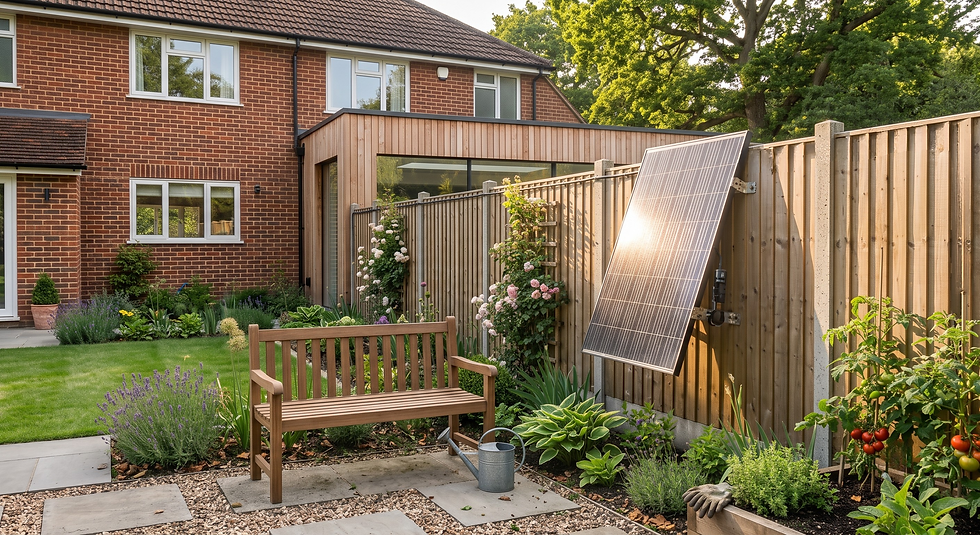
Since 1994, UK rules have not allowed a plug to be used for anything that generates power. That is why plugging a small solar panel into a wall socket has been illegal here, even though it is ordinary practice in Germany. That changes on 27 August 2026.
The government consulted in June, received 466 replies, and published its decision on 16 July, with over 85 per cent of respondents backing the safety rules proposed. The change covers England, Wales and Scotland. Northern Ireland has its own separate electricity rules which have not been changed to match.
Two details are being widely misreported, so they are worth stating plainly.
You may have one panel per home, not one per circuit. The government has agreed that eventually you will be able to have one on each separate circuit in your house, but that depends on an industry rule being updated first. Until it is, the limit is one per household.
You will need to tell your electricity network operator. This is a free online notification. Your network operator owns the cables in the road, and is not the company that sends your bill. If you are unsure which yours is, ask us.
WHAT 800 WATTS ACTUALLY RUNS
The legal limit is 800 watts. That number means very little on its own, so here is what it looks like next to things you already own. These power ratings come from the Centre for Sustainable Energy (https://www.cse.org.uk/advice/how-much-electricity-am-i-using/), an independent charity that gives free energy advice.
• Charging a phone, about 5 watts: your panel covers it many times over
• Laptop, 50 watts: covered sixteen times over
• Television, 120 watts: covered six times over
• Fridge-freezer, 300 watts: covered, with plenty spare
• Microwave, 1,000 watts: your panel covers most of it
• Washing machine, 2,100 watts at its peak: about a third
• Kettle, 3,000 watts: about a quarter
The pattern is clear once it is laid out. Your panel will not run the kettle, and never was going to. What it will comfortably do is run the fridge, the television and a laptop at once with room to spare. Most of the time it is not powering any one thing outright, it is quietly shaving a slice off whatever the house is drawing, so you buy less from your supplier.
Over a bright summer day, a well-placed panel makes around four units of electricity. A unit is what your bill calls a kilowatt hour. Four of them is roughly a load of washing, a dishwasher cycle, and every phone and laptop in the house charged. Across a full year, the government's modelling puts a south-facing panel at about a fifth of what a typical household uses.
WHY TIMING MATTERS MORE THAN ANYTHING ELSE
Here is the part that decides whether one of these panels is worth having, and it is not about the panel at all.
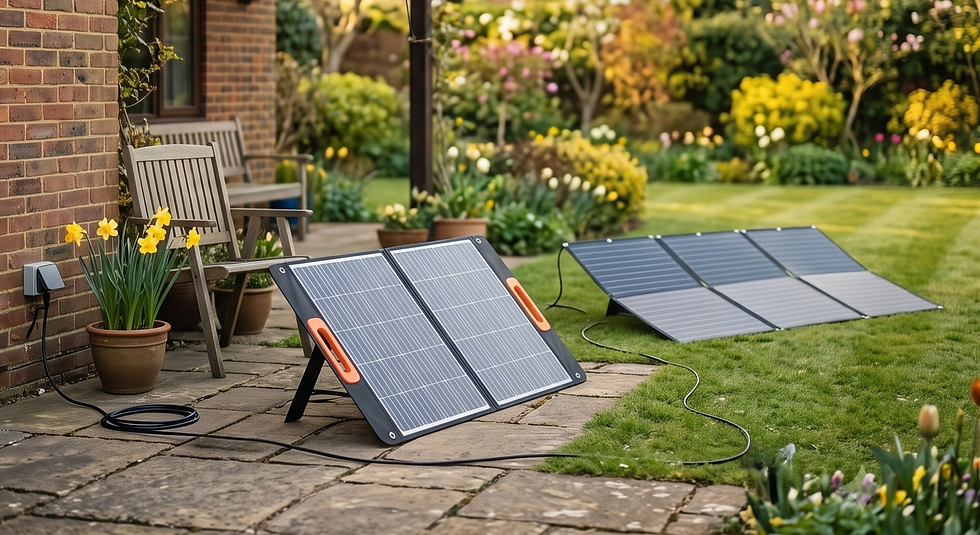
There is no battery, and you are not paid for anything you send back to the grid. So you only save money on electricity you use at the moment the sun is making it. Anything generated while the house is empty simply leaves, and you get nothing for it.
The government's own figures show what this costs people. A south-facing panel generates about £180 worth of electricity a year, but a typical household uses just under two thirds of it as it is produced. The rest is lost, which is why the headline saving is around £110 rather than £180.
That gap is the one thing you control. Push your share towards four fifths and the same panel is worth roughly £144 a year, about £34 more, purely for changing when you switch things on. Four habits do most of the work:
• Run the heavy jobs at midday. Your panel is strongest from around 10am to 2pm. A washing machine or dishwasher started after breakfast captures far more of your own electricity than the same load after supper. If your machine has a delay timer, this is what it is for.
• One big thing at a time. Two appliances at once will outrun 800 watts and you simply buy the difference. Dishwasher at noon and washing at two beats both together.
• Charge everything in daylight. Phones, laptops, power tool batteries, the cordless vacuum, an e-bike. These use so little that a good day's generation would charge a phone around two hundred times over.
• If you are out all day, face the panel east or west rather than south. This sounds backwards, but the government's figures bear it out. A vertical east or west panel generates less overall, yet households keep a larger share of it, because it spreads output across morning and evening when people are home. Match the panel to your life rather than to a diagram.
WHAT IT CANNOT DO
Being clear about the limits matters as much as the benefits. These systems have no battery, so they will not keep your lights on in a power cut; they shut down automatically when the grid goes down, which is what keeps engineers safe. They earn no export payments. And they are not a substitute for a proper rooftop system, which is many times larger, professionally installed, and can be paid for what it exports.
What they are is a low-cost, low-commitment way into solar, and the first that works for renters, flats and homes where a roof array was never realistic. If you rent or lease, you will need your landlord's or freeholder's permission. Around Forest Row, check with Wealden District Council before mounting anything outside, as the High Weald National Landscape, conservation areas and listed buildings each carry their own rules.
Nothing is on sale yet. Products must be approved and listed on an official register first, and none have been. We will tell you as soon as that changes.
TWO GRANT UPDATES WORTH KNOWING
The Boiler Upgrade Scheme grant for homes with no mains gas has been live at £9,000 since 21 July, running to March 2027. We checked the detail: it covers Air Source and Ground Source Heat Pumps only, not biomass boilers or Air-to-Air Heat Pumps.
And a question several residents have asked us: ECO4 is winding down, as its extension to December 2026 was granted so installers could finish jobs already under way rather than start new ones.
Important: If your household income is £36,000 a year or less, the Warm Homes: Local Grant is the open route and can cover up to £30,000.
If you are weighing any of this up, come to our free drop-in on Saturday 16 August, 10:00 to 13:00, at Forest Row Community Centre.
You can also compare schemes on our grants page, send a quote to our quotes and bills review, find vetted installers on our audited local suppliers list, or look up your home's Energy Performance Certificate as a sensible first step.


Comments